
The Caravan Was Already Waiting: Our First Camping Trip at Glenworth Valley
Anjusha Khandavalli
August 2, 2026 · 12 min read
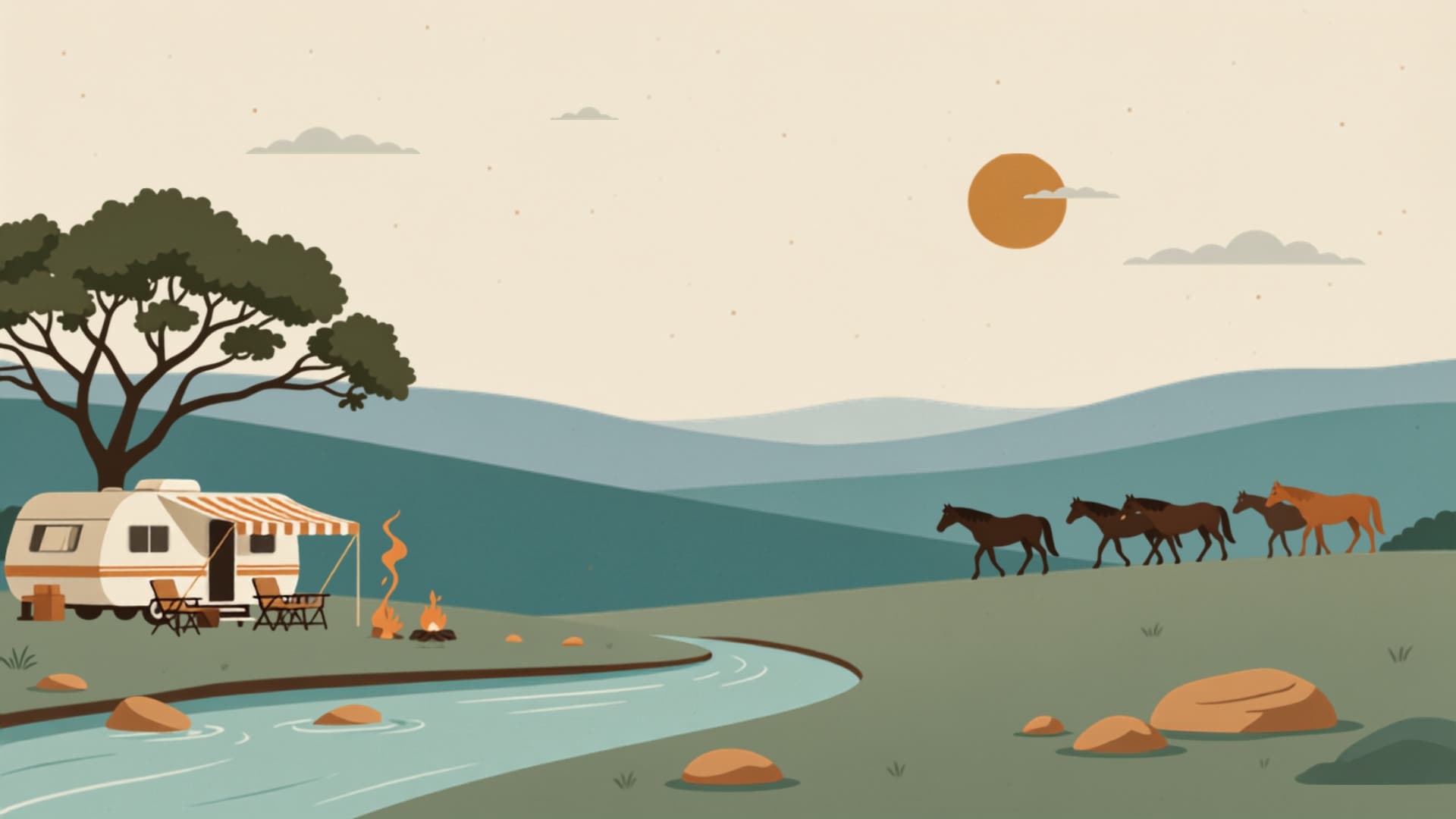
For nearly two years, “we should go camping” was a sentence we said out loud and never quite finished. Not for lack of wanting. We just never had a setup.
We don’t own a caravan, and our little hatchback isn’t set up for towing. We had no tent, no camp chairs, no folding table, no gas stove, no esky worth the name. Plenty of people we know hitch up a van and head north every long weekend and love it. That has just never been us, and building a camp setup from scratch always felt like a bigger project than one free weekend could absorb.
Then we found out you can have the caravan delivered. The owner tows it to your campsite, sets it up, and comes back for it at the end; you turn up with your bags. We booked one through Camplify for two nights at Glenworth Valley, drove up in our ordinary little car with nothing but clothes and groceries, and walked into a camp that was already standing.
That weekend turned into two hundred and fifty horses at dusk, a Highland cow eating out of my hand, my first time on horseback, an axe-throwing upset I am still hearing about, and a quad bike through creek crossings. None of it happens unless the booking part works, so I’ll start there.
How caravan delivery actually works
I want to be specific about this part, because it’s the bit I would have wanted explained to me.
Camplify is basically Airbnb for caravans: private owners hire out their vans, and you book directly with them. Some owners offer delivery, and there’s a filter to show only those vans. The owner tows the van to your campsite, positions it, levels it, connects everything, and comes back at the end of your stay to collect it. Your only job is to bring a car with room for your bags.
We messaged the owner before booking, which I’d recommend. Delivery is arranged directly with the person who owns the van, so you agree the fee, the distance, the drop-off time, and where in the campground you’d like it. It’s usually charged per kilometre from the owner’s home base, counted both ways, so a van based near your campsite works out much better value than one two hours away. In the end, how close the owner was to Glenworth mattered more to our booking than the nightly rate did. Camplify’s own caravan delivery guide walks through the process if you want the detail before you book.
We also let Glenworth Valley know a caravan was coming so they could allocate a site that fit it. That was one quick email.
The drive is about an hour north of Sydney, off the M1, down into a valley where the phone signal drops out. We turned into our site and the van was already there, level and connected, with the camp chairs and table set up and the awning out over a patch of shade the owner had clearly picked on purpose.
We’d been in the car for an hour. Setting up camp took us zero minutes. I stood there holding a bag of groceries with nothing to do, and the holiday had already started.
The owner walked us through everything: the gas, the water, the fridge, the toilet, which switch does what, who to call if anything played up. It took about fifteen minutes, and then he left and we had the place to ourselves.
The first afternoon, which we spent doing nothing
Our site sat along Popran Creek, which runs through the campgrounds, and the sound of it became the background noise of the whole trip: water, wind in the gums, and every so often a whipbird.
Fires are allowed in the existing pits, and the on-site shop sells firewood and ice through the day, so we bought a bundle and got a fire going far earlier than we needed to, mostly for the satisfaction of it. There are hot showers, flushing toilets and running water in the campgrounds, which is a more comfortable setup than the version of camping I had in my head. There’s Wi-Fi near reception, which we used once and then forgot about.
Honestly, that first afternoon is what won me over. We got to arrive tired and stay tired, and the evening was already ours.
Half past four, when the horses come through
Someone at reception told us to be near the creek by half past four. We stood around for a bit, not sure what to expect, and then we heard the hooves and the herd came through: up to two hundred and fifty horses moving together from their paddocks to their night pasture, passing close to where we stood.
I’d never seen that many large animals move at once. It’s over in a few minutes, and the dust they kick up hangs in the afternoon light for a while after they’ve gone.
It runs daily from 4:30pm, and it costs nothing if you’re staying on the property. Ask at reception where to stand on the day, because the spot changes and the wrong paddock means watching from half a kilometre away.
Highland cows, miniature goats, and a five-dollar bag of feed
The next morning we went to the petting farm feeding session, which I hadn’t expected to care about. You meet at the horse yards, buy a bag of feed from reception for five dollars, and spend a while being politely mugged by farm animals. The Scottish Highland cows have fringes so long you can’t work out how they see. The miniature goats have no boundaries at all, and the emus are a little alarming up close.
A Highland cow ate straight off my palm, tongue like wet sandpaper, in no hurry at all. While I was distracted, one of the goats went through my jacket pocket, which, to be fair, did have food in it.
The sessions run at 8:30am and 4pm on weekends, with daily sessions during school holidays, and you don’t need to book. It’s free if you’re camping or holding a day pass; the feed is the only cost, and that five-dollar bag was the best value of the whole weekend.
Two hours on a horse, having never sat on one
You can’t stay at Australia’s largest horse riding centre and not get on a horse. That was the logic, anyway. I’d never ridden, not even the beach-pony kind, and I was fairly sure I’d be the one they’d have to help down after ten minutes.
They have over two hundred horses and they match you properly: they ask about your experience, look at you, and put you on an animal that suits. Mine was patient in a way that felt almost deliberate, like he’d worked out within thirty seconds that I had no idea what I was doing and had decided to carry the situation for both of us.
The session runs about two hours including a proper briefing: how to hold the reins, how to sit, how to stop, what not to do. Then you ride out into the bush in a group of up to a dozen, and the pace is set by whoever is least experienced. On that day, that was me.
Nobody tells you how much of riding is negotiation; you are sitting on a large animal with opinions. Somewhere in the second hour I stopped bracing against every step and started moving with it, and after that I actually enjoyed myself. The best stretch was a trail where the trees close over the top and all you can hear is hooves on dirt.
Axe throwing, and the fall of a champion
Work had been heavy for months, and it turns out two hours of throwing axes at a wooden target in the bush is a very effective reset. You get a lesson first: grip, stance, distance, and the fact that it’s less about force than about letting go at the right moment. Then they set you loose on the targets.
Now the part I have to own up to. I’ve played this before and I won that day, so I walked in confident. This time I could not hit a bullseye to save my life; the axe kept bouncing off the board with an insulting little thud. My friends, meanwhile, were sticking throw after throw, and they have not stopped mentioning it since. The crown has changed hands.
For two hours I didn’t think about work once, which is more than most Saturdays manage. Axe throwing is 18+, or 16+ with an adult, and there’s a waiver to sign. Long pants, sleeves and fully enclosed shoes are required, no singlets or slip-ons. Book ahead, because sessions need minimum numbers to run.
Quad bikes, creek crossings, and fifteen kilometres of dust
The quad bikes were the opposite kind of outing. They’re automatic (thumb throttle, hand brakes, no gears), so you don’t need a licence or any experience, and helmets are compulsory. After an induction in a flat paddock you head out on more than fifteen kilometres of trails, through open paddocks and twisting bush track and a couple of creek crossings where the water comes up over the tyres.
It’s an hour and a half, and you come back filthy. You can buy coveralls if you’d rather not, and hire a GoPro if you want footage.
Back at the van: fire, food, and a proper bed
The evenings were my favourite part. We’d come back aching, take a hot shower, and cook. The van had a proper stove and a fridge, so we weren’t living out of an esky; on the second night we made rice and curry properly, on a gas ring in the middle of the bush.
Then we’d light the fire (in the existing pit, kept small; that’s the rule) and sit out with the last of the morning’s firewood. The temperature drops fast in that valley once the sun is gone.
The bed was a real mattress with a proper doona, in a van with a door that shuts against the cold. I slept better than I do at home, and I woke early both mornings without an alarm, which never happens. There was mist sitting in the bottom of the valley until the sun got to it.
So, is having the caravan delivered worth it?
I’ve thought about this a lot, because it isn’t free and I don’t want to pretend it is. You’re paying the nightly hire, the campsite fees, and a delivery fee that scales with how far the owner tows it. If you’ve got a car set up for towing, taking the van yourself costs less and gives you the van for the whole trip rather than just the campsite. That’s how most people do it, and for good reason.
Delivery turns the same holiday into something you can book the way you’d book a hotel: choose a van, agree a drop-off time, turn up. For us, that’s the reason the trip finally happened. It’s also the lowest-effort way to find out whether caravanning is your thing before committing thirty thousand dollars to a hunch. We’ll be back, probably in a van again, maybe one we tow ourselves once we’ve got the car for it.
Know before you go
- Where it is: Glenworth Valley is on the NSW Central Coast, about an hour north of Sydney and roughly twenty minutes from Hornsby. You don’t need a four-wheel drive for the main campgrounds.
- Getting a caravan delivered: On Camplify, filter for vans that offer delivery, then message the owner before booking to agree the fee, the distance and the drop-off time. It’s typically charged per kilometre from the owner’s base, counted both ways, so a nearby van is better value than a cheaper distant one. Their delivery guide explains the process.
- Tell the campground: Let Glenworth Valley know in advance that a caravan is coming so they allocate a site that fits it. Powered and unpowered sites are both available along Popran Creek.
- Camping costs: From about $35 per adult and $17.50 per child aged 7–17 per night, with under-sevens free. Powered sites add a site fee. Check-in is midday; check-out is 4pm for unpowered sites and 10:30am for powered ones — worth knowing before you plan your last morning.
- Fires: Allowed in the existing fire pits unless there’s an RFS ban, kept to a maximum of one square metre. Firewood and ice are sold at the on-site shop through the day, so don’t bother bringing wood.
- Running of the Horses: Daily from 4:30pm, free if you’re staying. Ask at reception that day where to stand — the spot changes and it makes all the difference.
- Animal feeding: Petting farm sessions meet at the horse yards at 8:30am and 4pm on weekends, with daily sessions during school holidays. No booking needed. Free for campers and day-pass holders; feed bags are $5 at reception. Bring small change and low expectations about keeping your jacket clean.
- Horse riding: Two hours including the briefing, from around $125 per person, first-timers welcome. Minimum age 7, maximum rider weight 100kg including clothing and helmet. Small groups of up to twelve. Helmets are compulsory and can be hired for a small fee.
- Quad biking: About an hour and a half, from around $125 per person, no licence or experience needed. Minimum age 12, and riders aged 12–16 must have a participating adult with them. Helmets compulsory, hire available. Coveralls and GoPros can be bought or rented on site.
- Axe throwing: Two-hour guided sessions, 18+ or 16+ with an adult guardian, waiver required. Sessions need minimum numbers, so book ahead — especially on weekends.
- What to wear: For riding, quad biking and axe throwing you need long pants and fully enclosed shoes, with shoulders covered. No singlets, no thongs, no slip-ons. Bring far more warm layers than you think you need; a valley gets cold quickly after dark.
- Book activities before you arrive: Weekends fill up, and sessions that don’t reach minimum numbers don’t run. We booked ours in advance and were glad we did.
- Dogs: Welcome only during designated dog-friendly periods — not on school holidays or long weekends — with a maximum of two per booking, on leads.
What we took home
We’d always assumed camping needed a garage full of gear and a certain kind of competence, and for two years that assumption kept us home. It doesn’t. You can book the whole thing for a single weekend with none of your own equipment.
We drove home on Sunday with dirt in the car and every muscle complaining, already working out when we could come back.
Planning your own? Browse caravans available for delivery on Camplify, and see what’s on at Glenworth Valley.